
On December 25, the mysteries and magic of the Christmas and New Year holidays begin. And they are ushered in by the Christian world’s second-largest holiday after Easter—Christmas. Traditionally, it is celebrated not only by believers of various denominations but also by those who are indifferent to religion.
For this has long been the custom, and this holiday is one of those intangible values that accompany the lives of most of us from childhood to old age. But it is no coincidence that the first sentence refers not to a single holiday, but to a series of festive (though, of course, in our current circumstances, working) days. Let us recall where these traditions came from and what these holidays are.
“From Star to Star”
The culture of our people is inextricably linked to the calendar. As, in fact, is the culture of any people—first and foremost, of course, an indigenous people who have lived on their land since time immemorial, rather than a people formed from settlers representing various national communities with different traditions and beliefs. More precisely, it is the traditional way of life that, to this day, to a certain extent determines the rhythm of every person’s existence. This has been the way since time immemorial, from our ancestors, for whom certain dates on the calendar were important milestones in the cycle of daily life. Moreover, they were repeated every year, as they marked the cyclical nature of fleeting time and its connection to the changing seasons and natural processes. And they reflected these in their traditions. It should also be noted that these days were honored and celebrated in cities—both large and small (perhaps somewhat differently than in villages, but just as joyfully and heartily).
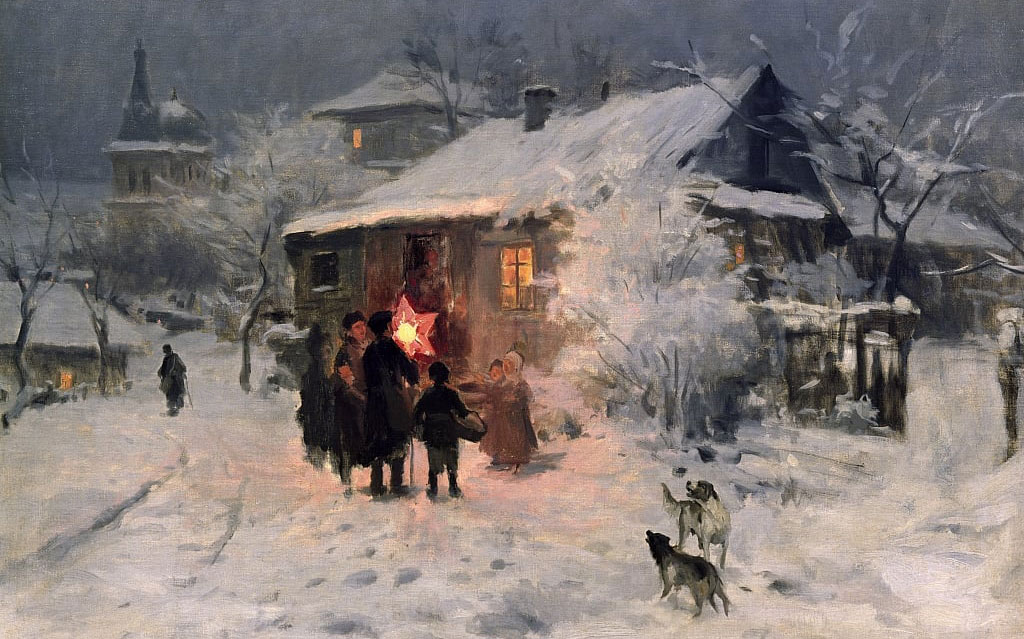
It is believed that the winter holiday cycle in Ukraine begins on December 25, that is, on Christmas Day. Or, to be more precise, on Christmas Eve, which is also known among the people as Kolyada. The reason for the name “Kolyada” is clear from the title: it was on this very evening that carolers began their journeys with a star and a towel. As a reminder, in our country since 2023, this major holiday—along with other fixed Christian holidays—is now celebrated on December 25, following the transition of the Orthodox Church of Ukraine (OCU) and the Ukrainian Greek Catholic Church (UGCC) to the New Julian calendar, that is, 13 days earlier than before, and their dates coincide with those of the Gregorian (civil) calendar. This very day is recognized as a public holiday in our country. The twelve days of the Christmas and New Year holiday cycle—from Christmas to Epiphany, or “from star to star”—are called the “holy days.” Why “from star to star”?
Because on Christmas Eve, young people began caroling, and the Star of Bethlehem was an essential attribute of the carolers, while on Epiphany, the caroling ended and the Star of Bethlehem “faded” until the next Christmas and New Year.
“Oh, who, who loves St. Nicholas…”
Returning to the Christmas and New Year holiday cycle, we should note that our children would disagree that it begins on Christmas Eve: for them, the festive New Year’s and winter revelry begins on St. Nicholas Day with its St. Nicholas gifts, merriment, and anticipation of all sorts of pleasant surprises, which Russia is trying to deprive them of. Despite the war, adults—if they are human beings and not scum in Russian uniforms or expensive civilian suits that cannot mask their inhuman nature—try to give children a holiday and fulfill their hopes for a miracle. It is no coincidence that in Kyiv, even the country’s main Christmas tree is lit on the eve of St. Nicholas Day. Now this date falls on December 6. And it is on this very day that children and adults sang (and still sing!) an ancient carol—a hymn to St. Nicholas. It is sung in various regions of our country, so this carol has a number of slightly different variations.
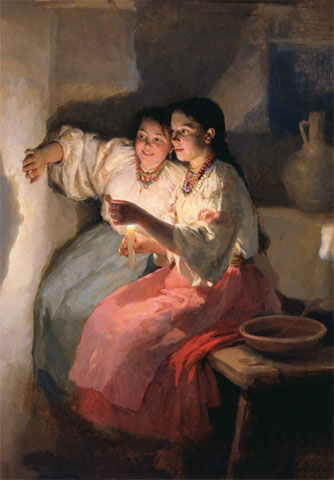
Some adults, especially unmarried young women who know and respect folk customs, would disagree that New Year’s celebrations begin only on Christmas Eve. For them, the start of the festive winter cycle is St. Andrew’s Day, celebrated on the last day of autumn, November 30. It is also called Kalita and is known for its cheerful youth rituals, marriage divinations, balabushka doughnuts, and the kalita itself—a round, sun-like ritual bread smeared with honey, and so on.
And only then, on the evening before December 25, will we celebrate Christmas Eve and, at the same time, welcome Kolyada—a former pagan festival marking the Sun’s return to spring, which coincided with the start of the Christmas cycle. There were also fortune-telling, gifts, and the most famous custom—caroling. The evening before Christmas is steeped in countless customs, traditions, and rituals. These include the “lavish supper” of twelve Lenten dishes, the main ones being rich kutia and uzvar, and the setting up of the didukh, and later—the Christmas tree (primarily, of course, in cities), and evening carols praising Christ and offering greetings to the hosts of the homes, and new fortune-telling rituals, and many weather omens.
And then there are the Christmas nativity plays—traveling puppet theaters (KP covered this tradition in detail in the article “There Is No Christmas Without a Nativity Play” in Issue No. 1 of 2021) and so on.
And then, on December 25—Christmas Day itself, with its special atmosphere of wonder and visits from relatives, associated with countless traditions and omens!
And then the New Year’s holidays begin, which in our culture are also clearly associated with Christian holidays.
“To Happiness, to Health, to the New Year!”
First and foremost, there is Generous Evening (December 31). Why “Generous”? Because it was on the evening of December 31 that people prepared a symbol of prosperity—the “generous” kutia, which could be seasoned with milk, cream, butter, and meat—unlike the “rich” kutia on Christmas Eve (rich in various additions—poppy seeds, raisins, nuts, etc.), as well as knish, buckwheat-stuffed sausages, varenyky, and other delicious dishes. That evening, the girls would once again tell fortunes, while groups of carolers dressed as traditional characters would go from house to house, singing carols to wish the homeowners health, prosperity, and happiness for their families, and in return would receive gifts. Generous Evening is also called Melanka—in honor of Saint Melania.
The next day was St. Basil’s Day, dedicated to St. Basil the Great. This is, in fact, New Year’s Day. In the morning of this day, groups of children went from house to house and scattered grain while saying “For Happiness, for Health, for the New Year! “God, grant us wheat, rye, and all kinds of grain!”. Housewives baked special cookies shaped like farm animals, but pork dishes were considered the main course on the table.
And then on January 6—Epiphany, which coincides with the Feast of the Epiphany. It concludes this festive cycle, and this day is associated with the church rite of the blessing of water and many traditions related to water—right down to the well-known custom of immersing oneself in an ice hole, called the Jordan—as a remembrance of the river in which Jesus Christ was baptized. People have long believed that even the sick can be healed during such a bath, as blessed water gains healing power even in rivers and lakes. By the way, water blessed on Epiphany is kept throughout the following year.
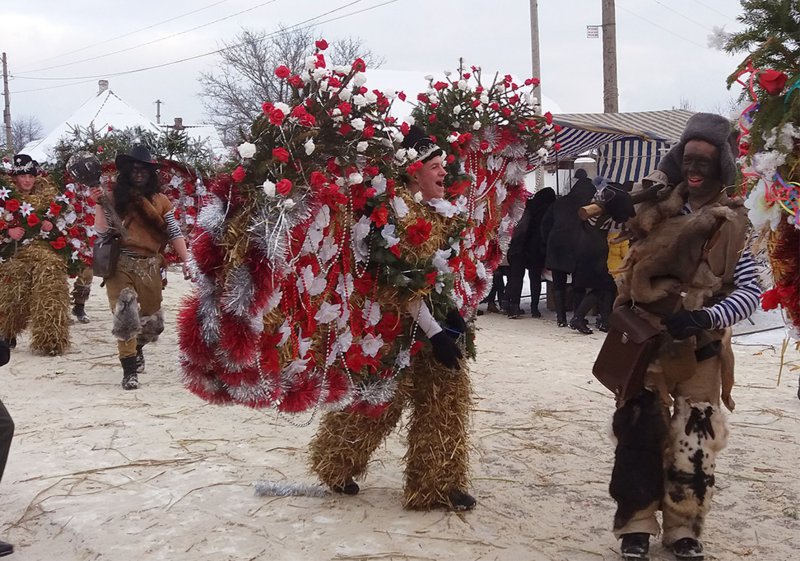
On this day, Ukrainians concluded their caroling and held a “rozkolyada,” “rozshchedruvannya,” or “rozmelanky”—festive gatherings of all the carolers, where they reminisced about how they celebrated these holidays, played games, and danced. Moreover, the feast was organized using the money left over from caroling.
One should not think that all these traditions have remained merely as memories of past centuries. No, even though they were banned under Soviet rule, they have survived and live on to this day, although some have been partially forgotten. Nevertheless, in recent years these traditions have been revived, and in light of the war that Russia has unleashed against Ukraine, they are being somewhat renewed and even taking on new meanings…
So it’s only just beginning. And although for now we cannot celebrate these holidays as we did in peacetime, we still remember them and honor them. Merry Christmas and Happy New Year to you, our dear readers!