

This year, the Educational and Scientific Institute of Atomic and Thermal Power Engineering (IATE Institute), established on the basis of the Faculty of Thermal Power Engineering at Igor Sikorsky Kyiv Polytechnic Institute (KPI), celebrates its 95th anniversary.
After all, it was founded back in 1931, when two departments—Steam Engines and Thermal Power Plants—were established within the Kyiv Energy Institute (KEI), which became the foundation for the creation of the Faculty of Thermal Engineering (TF) that eventually became the Faculty of Thermal Power Engineering (TEF).
What does the KEI have to do with this? The fact is that in 1930, the Kyiv Polytechnic Institute was temporarily divided into 10 specialized institutes (mechanical engineering, energy, chemical-technological, etc.).
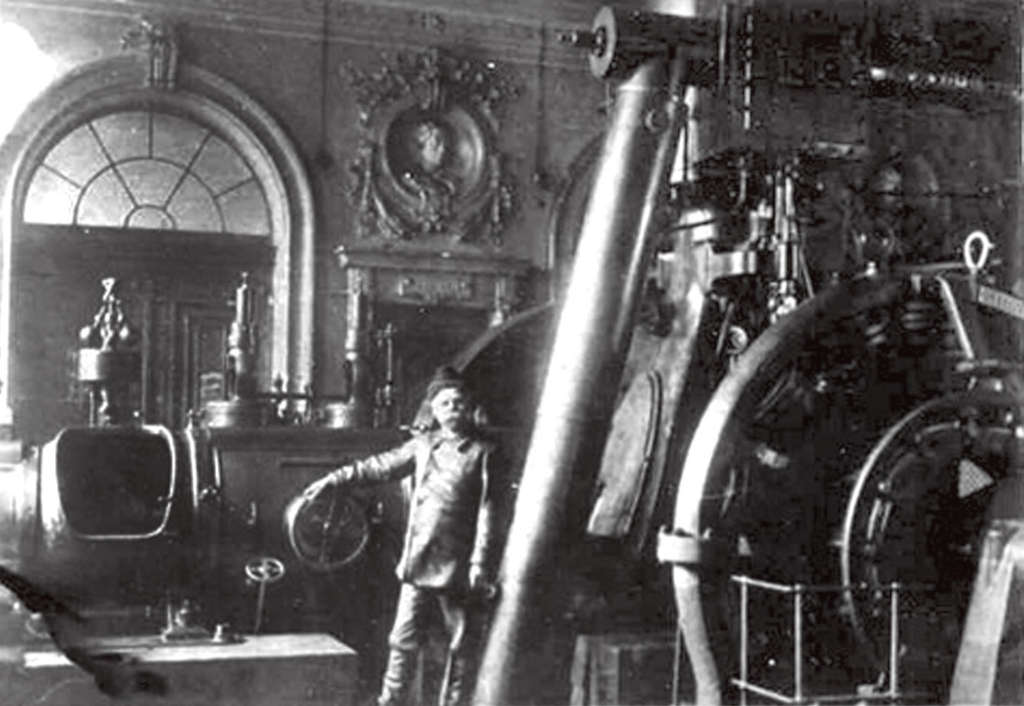
However, the training of thermal engineering specialists had already been taking place within the walls of the Kyiv Polytechnic Institute: from 1898 to 1931, it was conducted within the Mechanical Engineering Faculty at the Department of Applied Mechanics. The training of specialists in thermal power plants was facilitated by the construction of an experimental power plant on the KPI campus, which was equipped with three steam boilers and a steam engine with a capacity of 250 hp (110 kW).
In June 1934, pursuant to a government decree, the Kyiv Industrial Institute was established from three specialized institutes, and in July 1944, the institute was renamed the “Kyiv Polytechnic Institute.”
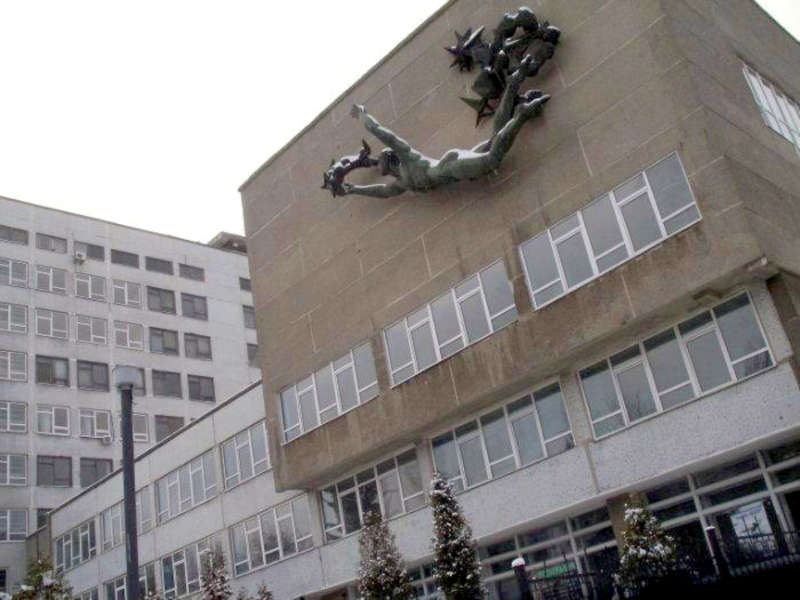
World War II affected the activities of all the institute’s departments: a difficult evacuation, work in Tashkent, and then a return to Kyiv. The Faculty of Thermal Engineering returned from evacuation in September 1944. In 1974, the first phase of the new Building No. 5 of the Faculty of Thermal Engineering was commissioned.
Due to the growing role of nuclear energy in the national economy, staffing challenges, and KPI’s international cooperation in training engineers for the energy sector, a decision was made on October 4, 2021, to establish the Educational and Scientific Institute of Nuclear and Thermal Energy based on the TEF.
Today, the IATE Institute ranks among the top departments at Igor Sikorsky KPI in terms of student enrollment—approximately 1,500 students—and faculty—approximately 130.
The institute comprises five departments: Nuclear Energy, Thermal and Alternative Energy, Automation of Energy Processes, Digital Technologies in Energy, and Software Engineering in Energy.
In addition, the following units operate: the Research Center for Nuclear Power Plant Reliability and Safety, the Educational and Research Center for Nuclear Safety Support, the Scientific and Educational Center for Energy Decarbonization, the Research (Experimental) Laboratory of Processes in Energy Equipment, the Educational and Scientific Laboratory (ESL) of Cyber-Energy Systems, the ESL of Computer Modeling in Energy, and the ESL of Methodological Support for Internet Technologies in Energy.
A multifunctional simulator of a VVER-type reactor unit is used in the learning process. Today, a distinctive feature of the educational process at the IATE Institute is the increase in the number of study groups transitioning to blended learning (400 students). The tracking of the educational process and reporting on classes, quizzes, and exams have been ensured. The issuance of academic transcripts has increased nearly sevenfold. During the reporting academic year, four midterm exams, two exam sessions for tests and exams, and defenses of bachelor’s theses and master’s dissertations under professional and scientific educational programs for master’s students were organized, supported, and conducted.
As part of organizing meetings between students and interesting, successful individuals, entrepreneurs, heads of enterprises and institutions, and university alumni, more than 22 events were held. Visits to Profinstall, Sahara LLC, the ARDENZ plant, and Aerostar were particularly informative. Particularly noteworthy was the excursion by faculty members of the Department of Thermal Power Engineering to the State Specialized Enterprise “Chernobyl Nuclear Power Plant” (SSE ChNPP).
Currently, 445 students receive academic scholarships at the Institute of Thermal Power Engineering, including 72 who receive enhanced scholarships. 100 students receive various social benefits. We have much to be proud of: students Dmytro Lyakhor and Maksym Yurov receive the Igor Kurchatov Scholarship; Vladyslav Korin receives the President of Ukraine Scholarship; and Maria Zueva receives the Heroes of the Heavenly Hundred Scholarship. 14 students receive scholarships from JSC “NAEK ”Energoatom"; 4 students receive scholarships from Profinstall; and another 8 students receive scholarships from ARDENZ.
There have also been achievements in sports competitions. At the chess championship among students of Kyiv higher education institutions, Ulyana Yeshchenko won first place (blitz).
The IATE Student Council has become a model of cooperation and support for the administration and departments in the educational process. A website for the Student Council has been developed. On average, posts there receive over 1,000 views. Together with the IATE Institute Student Council, the Faculty of Natural Sciences held a hybrid Freshman Day.
Statistics show that the 2025 enrollment results for the IATE Institute demonstrate significant demand for majors in this field. A total of 463 students enrolled with us.
Dual education is also widely represented at the IATE Faculty. Dual education agreements have been signed with the municipal enterprise of the Kyiv City Council’s executive body “Kyivteploenergo,” the State Specialized Enterprise “Chernobyl Nuclear Power Plant,” the Institute of Technical Thermophysics of the National Academy of Sciences of Ukraine, and the Institute of Thermal Power Technologies of the National Academy of Sciences of Ukraine.
The scientific activities of the IATE Institute are focused on fulfilling the institute’s general scientific direction, which is called “Engineering and Technology.” The total number of research topics being carried out at the institute is 31, of which 20 are contract-based topics (3 funded by the state budget, 1 project from the National Research Foundation of Ukraine, and 16 funded by clients) with a total funding volume of 13,302,226.8 thousand UAH, and 11 are self-initiated topics. 13 students are involved in research projects (1 of whom is paid). The number of publications and patents prepared by students independently and in co-authorship is 24/149. 13 copyright certificates have been obtained.
Students of the IATE Institute are actively involved in research work. The institute hosts the student design bureau “Smart Energy Fab Lab” (SEFL) and six research clubs: in engineering: ‘RoboHub’; modeling of cyber-physical systems and systems based on the Internet of Things and Artificial Intelligence: “SmartEnergyLab KPI”; research into robotic systems and control of dynamic systems: “AerospaceLab KPI,” “Data Analysis and Fundamentals of Machine Learning,” “Environmental Aspects of Energy,” and “Environmental Protection Strategy.”
A student team from the Department of AEP, consisting of Vyacheslav Vasyanovich, Ivan Lazarenko, Andriy Ludchenko, and Volodymyr Mavrodi, won the All-Ukrainian MHP TECH Hackathon for Teams. Artem Mykhailets, a student of the Department of Information and Communication Technologies, joined the development of the All-Ukrainian digital platform “TitansUA,” created to support veterans, their families, and the families of prisoners of war, missing persons, and fallen defenders of Ukraine. Nazar Matvienko, a second-year student in the Department of IPZE, as part of the Virtual Deminers team, won second place in the All-Ukrainian hackathon “Safe Future: Concept of a VR/AR Simulator for Training Deminers,” organized by the Ministry of Economy, Environment, and Agriculture of Ukraine in collaboration with the national platform Demine Ukraine, the Center for Humanitarian Demining, and Igor Sikorsky Kyiv Polytechnic Institute, with support from “Universam Osvity.” The team also included Vladislav Shein and Sofia Bannikova. The team presented a concept for a VR simulator for training deminers, which simulates real-life demining scenarios and enhances the safety of the training process.
In 2025, 16 dissertations were defended for the degree of PhD.
In total, the IATE Institute has 89 graduate students (21 of whom enrolled in the graduate program in 2025) and 1 doctoral candidate. Six individuals also enrolled in the doctoral program: V.V. Baranyuk, I.Yu. Bilous, V.A. Peshko, A.Yu. Rachynskyi, D.V. Rindyuk, and S.V. Shapovalova. Incidentally, V.A. Peshko is an associate professor in the Department of Thermal Power Engineering and a winner of the “Best Teacher of the Year” award from NAEK “Energoatom” for 2025.
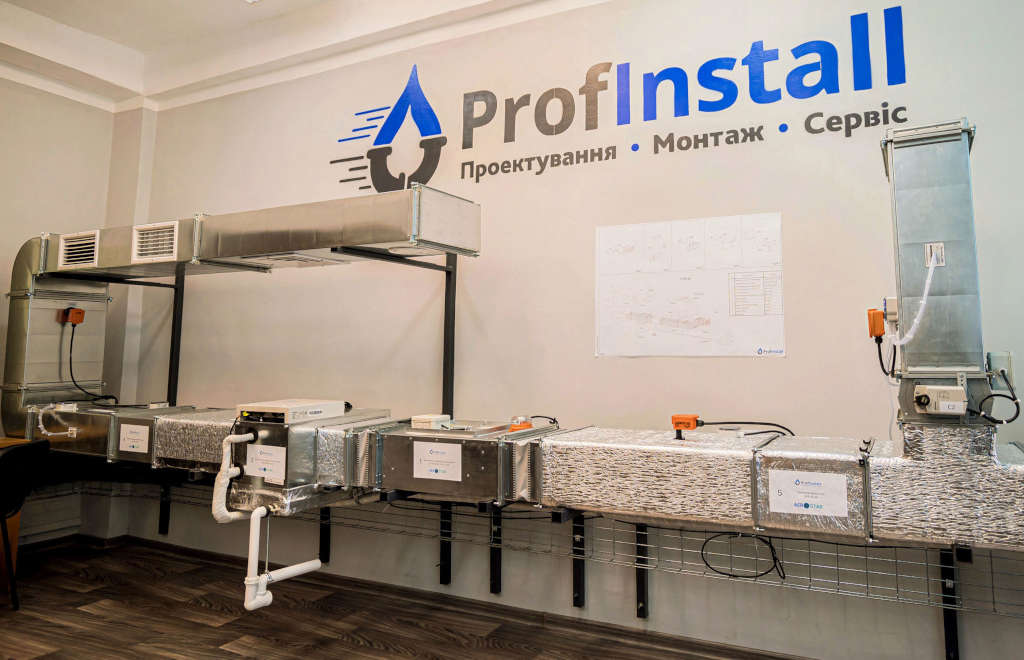
There are other achievements as well. In 2025, the IATE Institute opened the “Hajster Heat Pump” Educational and Research Laboratory with the support of Sakhara LLC and the “Heating, Ventilation, and Air Conditioning” Educational and Research Laboratory with the support of Profinstall.
In 2025, 15 international projects were carried out within the framework of the HORIZONT, NATO, and ERASMUS programs.
The Institute works closely with international organizations such as Schneider Electric, UNIDO, Klinkmann, the International Atomic Energy Agency (IAEA), the World Institute for Nuclear Safety (WINS), the German Society for International Cooperation (GIZ), HUAWEI TECHNOLOGIES CO. LTD, the National Nuclear Security Administration/U.S. Department of Energy, and the UNTC. However, its international activities are not limited to this. For example, seven foreign lecturers have been involved in online teaching. Seven publications with foreign co-authors have been published in journals included in the SCOPUS and WEB OF SCIENCE scientometric databases. Funding has been secured from GIZ and the NGO “School of Energy Efficiency,” and five contracts for research and development projects have been signed with foreign companies. Five of the institute’s scientists serve on editorial boards of international scientific journals. The Institute of Applied Technology and Engineering (IATE) collaborates with international educational and scientific institutions: the University of Sheffield and Aston University (United Kingdom), Gdańsk University of Technology, Warsaw University of Technology, Warsaw University of Life Sciences, Wrocław University of Science and Technology, Opole University of Technology (Republic of Poland), National Polytechnic Institute of Mexico City (United Mexican States), Riga Technical University (Republic of Latvia), Norwegian University of Science and Technology (Kingdom of Norway), University of Luxembourg (Grand Duchy of Luxembourg), University of Lorraine (Republic of France), Polytechnic Institute of Tomar (Portuguese Republic), University of Málaga, University of La Laguna (Kingdom of Spain); Institute of Technology Tallaght (Republic of Ireland); SAP University Alliances Program (Federal Republic of Germany). Students (9 applicants) participating in mobility programs at the IATE Faculty are currently in Tamar (Portuguese Republic), Giessen (Federal Republic of Germany), in Malaga (Kingdom of Spain), Kyoto (Japan), Esch-sur-Alzette (Grand Duchy of Luxembourg), Gliwice (Republic of Poland), and Dublin (Republic of Ireland).
In addition, staff members of the IATE Institute joined the EPW-4884 “Ukraine Energy Autark” project with state support from the Federal Republic of Germany to enhance professional skills and strengthen ties between the technical communities of Ukraine and Germany.
On September 29, 2025, a 230-person shelter was opened at the IATE Institute, enabling the continuation of in-person classes for students in lecture halls.
In the context of Russia’s military aggression against Ukraine, the main tasks facing the IATE Institute staff are training qualified specialists to ensure the security and resilience of Ukraine’s critical energy infrastructure and, indeed, the institute’s specialists’ work in this area; ensuring a sustainable educational process and upholding the principles of accountability, objectivity, and consideration of the needs of students and staff. On the agenda are the development of scientific and innovative activities, support for scientific schools, engaging students in scientific and innovative research, professional development of scientific and teaching staff and training of a scientific reserve, increasing publication output, and fostering international activities.