
Modern higher education is a borderless environment where theory intersects with cutting-edge practice and national experience is enriched by global trends. During the spring semester, the Faculty of Linguistics at Igor Sikorsky Kyiv Polytechnic Institute hosted a series of guest lectures delivered by leading Ukrainian and international scholars.
Master's and PhD students enrolled in the A1 Educational Sciences program, together with faculty members, explored a wide range of pressing topics, including psychological resilience in educational settings, innovative assessment methods, and the development of creativity.
The lecture series began with an open session that became one of the most engaging and emotionally impactful events of the semester. It was delivered by Mariia Bratko, Doctor of Pedagogical Sciences and Professor at Borys Grinchenko Kyiv Metropolitan University. Her lecture, Education Without Stress: Pedagogical Tools for Supporting the Mental Well-Being of Participants in the Educational Process, resonated deeply with the audience, as maintaining psychological well-being has become a critical priority in today's challenging environment. Professor Bratko introduced practical strategies for creating a safe and supportive learning environment, emphasizing the importance of empathy, effective time management, and self-care techniques for both students and educators.
A fresh perspective on assessment was presented by Tetiana Korol, Doctor of Pedagogical Sciences and Associate Professor of the Department of General Linguistics and Foreign Languages at Yuri Kondratyuk Poltava Polytechnic National University. Her lecture focused on a highly relevant topic in contemporary language education: Alternative Assessment Methods in Foreign Language and Translation Teaching. During her presentation, Professor Korol examined the advantages of non-traditional assessment approaches that not only diversify the learning process but also enhance student motivation. She shared practical examples of implementing alternative assessment tools, including checklists and language portfolios, various types of questionnaires and self-assessment reports, reflective journals and debriefing sessions, group discussions and project-based assignments, audio and video recordings of task performance, and detailed formative feedback. Together, these methods contribute to a flexible and effective system for assessing student learning in modern educational settings.
The international dimension of the lecture series was represented by David Anderson of Vilnius Gediminas Technical University. In his presentation, he emphasized the importance of creativity and innovative thinking as essential competencies for the twenty-first century. He shared European approaches to fostering creative potential and integrating innovative technologies into the educational process.
The lecture series became an excellent example of how collaboration among different academic communities and international partnerships helps Igor Sikorsky Kyiv Polytechnic Institute maintain high standards of educational quality. Each lecture not only enriched participants with new knowledge but also inspired further research, strengthened professional autonomy, and encouraged the adoption of innovative teaching practices.
The Faculty of Linguistics extends its sincere gratitude to the distinguished guest speakers for generously sharing their expertise, offering valuable insights, and inspiring our academic community. We look forward to welcoming them again in the future.
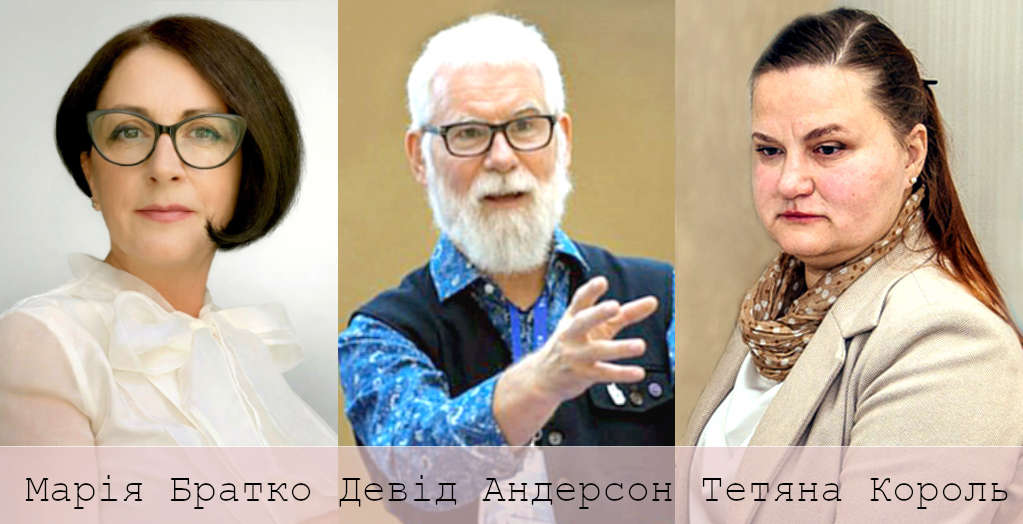 In the photo: Maria Bratko, David Anderson, Tetyana Korol
Note: The debriefing sessions mentioned in the article refer to a structured form of instructor-led reflection with students. According to lecturer Tetiana Korol, "Debriefing sessions involve a structured discussion of both the process and outcomes of translation and communicative tasks, while also identifying ways to further develop the knowledge and skills required for such activities. These sessions are guided by the instructor and may be based on feedback received or conducted in a more open format. They encourage all participants in the educational process to engage in active reflective practice."