
Kyiv Polytechnic is not only the cradle of engineering education, from which a host of scientific and educational institutions and manufacturing enterprises have emerged. It can also be called a nurturing mother who has embraced new departments, enriching the range of technical training.
A few years ago, on the grounds of the well-known Kyiv university—which separated from KPI in 1922—a commemorative plaque was installed, indicating the founding date as 1898. Well, adding a dozen or so years to the history certainly won’t hurt. I wondered if there might be pages in our university’s chronicle written long before its official opening date. No, we won’t embellish KPI’s history. But there are interesting twists in it that are unknown to the general public. For example, the Mezhigorsk Faience Factory.
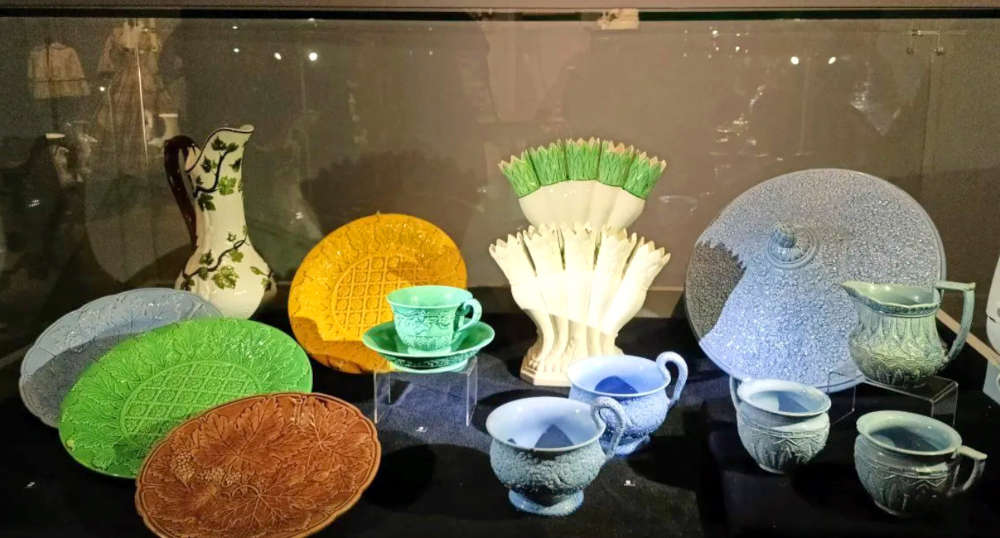
Faience, not porcelain. In 1796, German engineer Kranich discovered deposits of kaolin—the raw material for making tableware—near the Mezhigorsk Monastery, north of Kyiv. The Kyiv City Council was made up of smart people, so within two years, a ceramic factory began operating near the monastery to meet the needs of the market and the local nobility. The products stood out for their use of polychrome glazes and folk motifs, and were more affordable than porcelain. But in 1874, due to imports of cheaper products and economic miscalculations by management, production ceased.
New Trends. In 1919, the Mezhigorsk Art and Ceramics Technical School was established on the same site, training artists and ceramic technologists. The school featured a modeling workshop, a workshop for stoneware, refractory, and fine ceramics, and a ceramics laboratory. In addition to acquiring skills in drawing and composition, students received instruction in chemistry and mathematics. The school day consisted of four hours of lectures, four hours of production work, independent study, and extracurricular reading. In the evenings, students participated in club activities: they debated, sang, and even had a theater group that performed revolutionary puppet shows.
In 1921, graduates of the Ukrainian Academy of Arts (Kyiv) from Mykhailo Boichuk’s studio arrived here for an internship: Vasyl Sedliar, Oksana Pavlenko (painting), Ivan Padalka (composition), and Pavlo Ivanchenko (drawing). Their internship evolved into independent work. And as early as 1922–1923, over a thousand student works were exhibited at art exhibitions in Prague, Venice, Paris, and Berlin; in March 1923—at the All-Union Art and Industrial Exhibition in Moscow. The technological and art faculties were established. Students studied the frescoes of St. Michael’s and St. Sophia Cathedrals in Kyiv and copied artistic masterpieces. The instructors were bearers of living Ukrainian folk culture, possessed knowledge of art history, and were able to instill in their students a love for creativity.
After the announcement of the NEP, the Bolshevik authorities purchased avant-garde ceramic works en masse and sold them through embassies, art fairs, and exhibitions. This served as publicity and helped create a positive image of the USSR abroad.
In addition to tableware, flasks, and kumans, the Mezhigorsk Technical School also produced tiles and animal figurines: bears, lambs, and birds. The Preobrazhensky Cathedral housed the Museum of Ceramics of the Faience Factory, which was visited by L. Kurbas, O. Dovzhenko, O. Vyshnia, Y. Yanovsky, V. Sosyura, and O. Kopilenko.
Ceramic works by graduates of the technical school and their colleagues, created, in particular, in the Experimental Workshop of St. Sophia Cathedral in Kyiv, in the second half of the 20th century, adorned the interiors of the House of Cinema, the Khreshchatyk metro station, the Dnipro, Rus, and Tourist hotels, the lobby at UNESCO headquarters, and others.
Turbulent Times. In 1928, the educational institution was reorganized into an art and ceramics institute. In 1931, it was moved to Kyiv and renamed the Ukrainian Technological Institute of Ceramics and Glass (graduates received the qualification of engineer-technologist-ceramist). When the art faculty was transferred to the Odesa Art Institute, the rest of the institution was renamed the Ukrainian Institute of Silicates, which merged into the chemistry faculty of the Kyiv Polytechnic Institute.
At KPI. From the history of the Department of Chemical, Polymer, and Silicate Engineering at the Faculty of Chemical Engineering (now the Faculty of Applied Physics and Engineering): during the Soviet era, in accordance with a resolution of the Council of People’s Commissars of the Ukrainian SSR in 1930, the Ukrainian Technological Institute of Ceramics and Glass was founded in Kyiv. Within its structure, a department named “Processes, Machines, and Apparatus of Silicate Production” was established at the Faculty of Mechanical Engineering in 1933, where the training of mechanical engineers for the silicate industry began.
In 1936, the first class of 10 mechanical engineers for silicate production graduated.
In 1939, the Ukrainian Technological Institute of Ceramics and Glass was renamed the Kyiv Technological Institute of Silicates (KTIS) and transferred to the People’s Commissariat of the Building Materials Industry of the USSR. The department continued to train mechanical engineers for construction materials enterprises in the Soviet Union.
In 1953, the department was headed by Vasyl Fedorovych Dubovych, Ph.D. in Engineering, former rector of the Kuibyshev Institute of Engineering and Construction. After the merger of KTIS with KPI in 1954, the Faculty of Chemical Engineering was established at KPI based on the departments of processes, machines, and apparatus for silicate production and machines and apparatus for chemical production. It began training and graduating mechanical engineers for the chemical and building materials industries of the Soviet Union. Associate Professor V.F. Dubovitsky was appointed dean of the faculty.
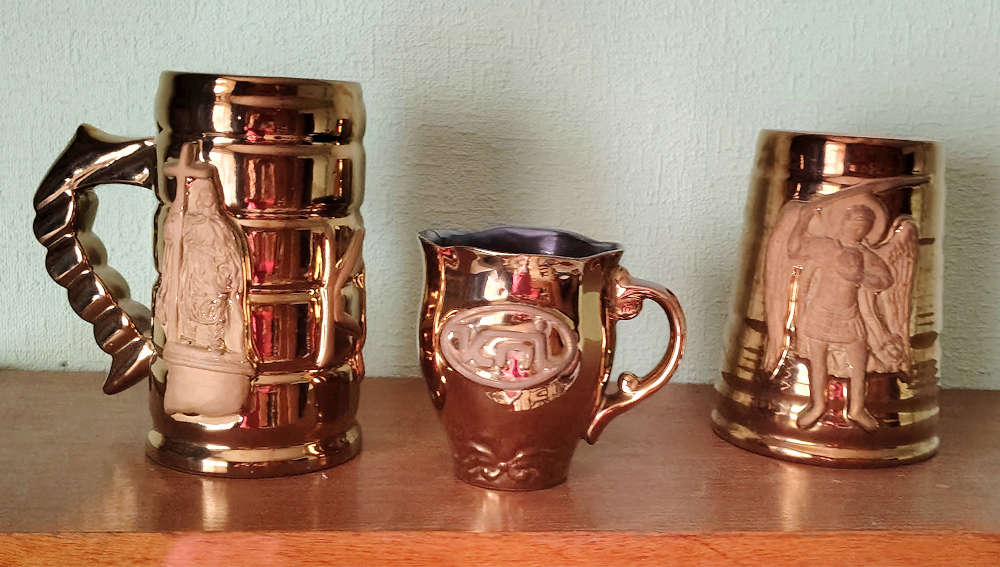 In the photo: Souvenirs for the 100th anniversary of KPI
Products. Today, the National Museum of Ukrainian Folk Decorative Art and the National Museum of Ukrainian History hold the largest collections of Mezhigorsk faience. Individual items were preserved in the Sumy Historical Museum and the Odessa Museum of Archaeology. There are collections in other countries and in private collections.
Looking at the photos of the exquisite works of the Mezhigorsk Faience Factory, I was reminded of the souvenir items made on the university grounds for the 100th anniversary of KPI. These are likely the last ceramics, albeit only distantly related to Mezhigorsk.