

Igor Sikorsky Kyiv Polytechnic Institute is a world-renowned technical university and one of Ukraine's most respected institutions of higher education. Its rectors have been distinguished scholars whose lives and scientific achievements are, for the most part, well documented. However, during the interwar period of the twentieth century, the fate of some of them was tragic. The communist regime accused them of their scientific and administrative activities, although their only goal was to preserve Ukrainian science and prevent the loss of the university's academic staff.
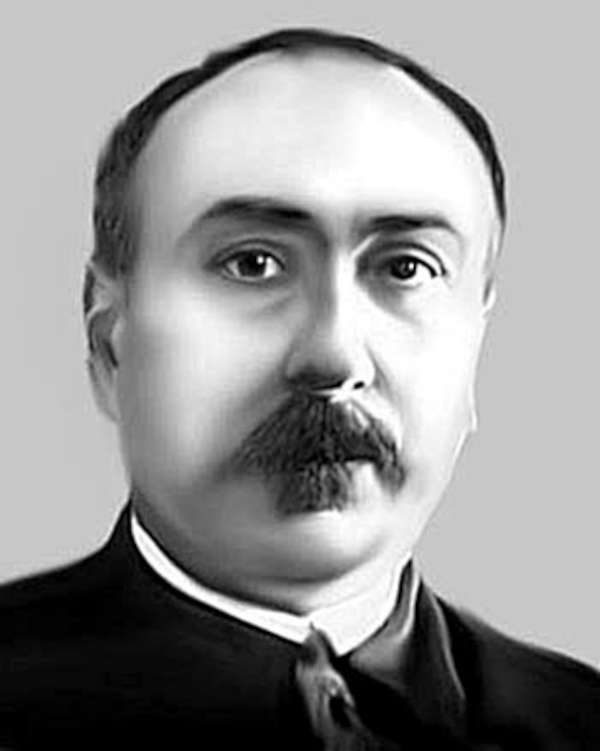 Serhii Feofanovych Veselovskyi served as a member of the Organizing Council and Rector of Igor Sikorsky Kyiv Polytechnic Institute from November 1920 to March 1921. During this period, his primary task was to preserve the institute's accumulated experience in engineering education, safeguard its academic staff, protect its facilities and equipment from destruction and looting, and restore the educational process. As of October 1, 1920, the institute had 249 students enrolled: 74 at the Faculty of Engineering, 46 at the Faculty of Chemistry, 85 at the Faculty of Mechanical Engineering, and 44 at the Faculty of Agronomy.
As an active participant in the Ukrainian student movement, Serhii Veselovskyi gained recognition long before 1917. In 1911, he was sentenced to exile for his involvement in organizing an underground conference of Ukrainian student communities in Kyiv. Two years later, he returned to his studies and successfully graduated from Kyiv Polytechnic Institute with a degree in agronomy. He remained at the institute as a scholarship recipient at the Department of Agricultural Economics and Statistics, preparing for a professorship. From 1916, he taught agricultural accounting at Kyiv Polytechnic Institute. For a time, he also served as editor of the Literary and Scientific Herald, a journal highly respected among Ukraine's patriotic intellectuals. He was repeatedly subjected to administrative penalties and brought to trial for publishing a number of anti-government articles. Following a break in his academic career caused by his active political involvement during 1917–1918, Veselovskyi resumed his teaching and research. From 1922, he was Professor and Head of the Department of Agricultural Economics at the Kyiv Agricultural Institute (1921–1929), and Dean of the Faculty of Animal Science at the Kyiv Veterinary and Zootechnical Institute (1923–1924).
However, the scholar's and organizer's work in agricultural science and education was abruptly interrupted in the 1930s when he was accused of counterrevolutionary activities in the cultural and academic sphere. From March 1917 to January 1918, Serhii Veselovskyi served as Deputy Chairman of the Central Council of Ukraine. In 1918, he chaired the Labor Commission within the General Secretariat and, for several months, represented the interests of the Ukrainian State in Petrograd as Consul General. Eventually, he was sentenced to three years of imprisonment and served his sentence at the BelBalt Corrective Labor Camp of the OGPU at Vedmezha Hora station. The exact circumstances and place of his death remain unknown. He was officially rehabilitated in 1989.
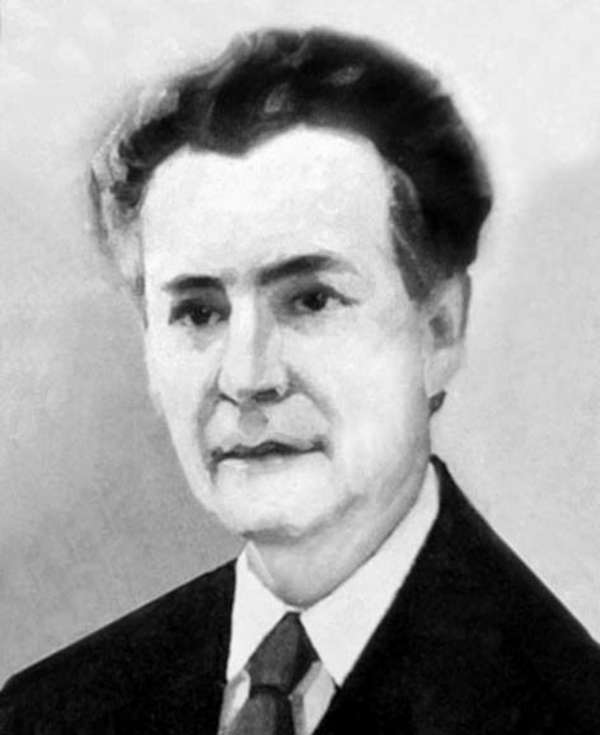 Ivan Antonovych Kukharenko served as Rector of Igor Sikorsky Kyiv Polytechnic Institute from March to December 1921. Beginning in February 1921, he headed the Department of Agricultural Production Technology at the institute, which in 1926 evolved into the Institute of Sugar Industry under his leadership. Between 1930 and 1934, the institute became the first in the world to develop a genetically monogerm sugar beet, an achievement that sparked a scientific and technological revolution in sugar beet cultivation and made it possible to fully mechanize all stages of production. Kukharenko was arrested in October 1937 on charges of espionage for foreign states. Ironically, the very international scientific missions that the Soviet government had assigned him, along with his professional contacts with foreign specialists, were later used as evidence against him. His criminal case contains indirect evidence that he was subjected to torture: on October 27, 1937, a memorandum was added stating that Kukharenko had injured himself by striking his head against a radiator in his prison cell. According to archival records, the concluding note in the indictment stated: "The accused did not confess." In February 1938, he was sentenced under the "first category"—execution by firing squad. He was officially rehabilitated in 1960.
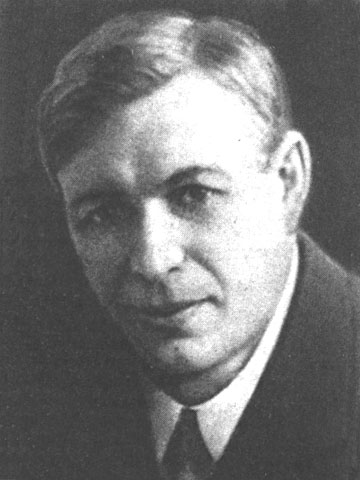 Mykola Pylypovych Yefimov served as Rector of Kyiv Industrial Institute (formerly Igor Sikorsky Kyiv Polytechnic Institute) from September 1934 to December 1936. A well-known higher education administrator, he had previously been Rector of the Kharkiv Mechanical Engineering Institute from 1930 to 1934. Before 1917, he was known as Yosyp Davydovych Zagranichnyi. During the Ukrainian Civil War, he served in Mykola Shchors's division. There is no documented information about his scientific or teaching activities, suggesting that he was primarily an administrator. He was arrested on December 28, 1936, and imprisoned in the special корпус of the Kyiv prison. According to researchers, during interrogations Yefimov admitted to the charges because other detainees had identified him as a participant. Such investigative practices were common at the time, and many defendants chose not to contradict investigators or agreed to any accusations simply to avoid torture. On March 28, 1937, the Military Collegium of the Supreme Court of the USSR held a closed trial in Moscow. Immediately after the hearing, he was executed by firing squad as a member of a counterrevolutionary Trotskyist terrorist organization, and all of his property was confiscated by the state. He was rehabilitated in 1958 and again in 1990 "due to the absence of the elements of a crime."
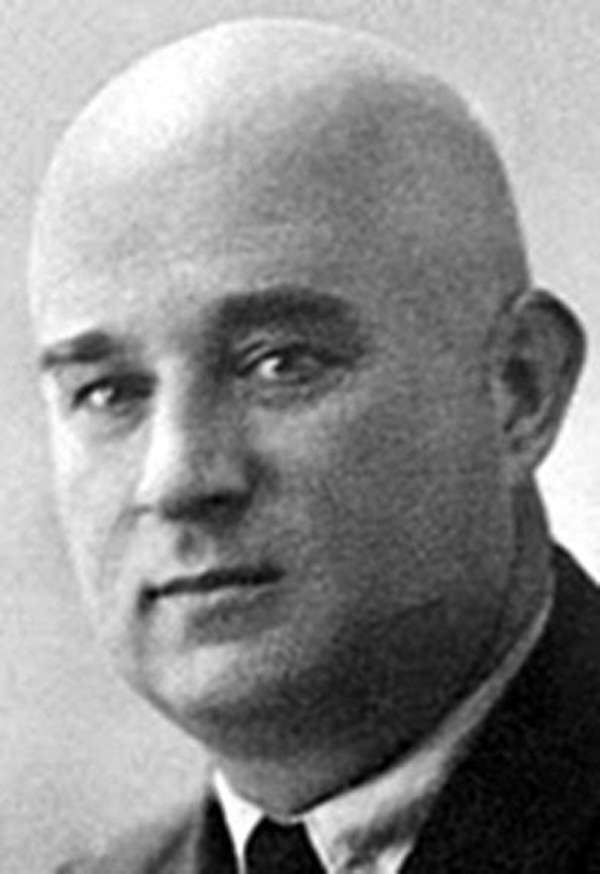 Pavlo Hryhorovych Zhykhariev served as Rector of Kyiv Industrial Institute (formerly Igor Sikorsky Kyiv Polytechnic Institute) from February to August 1937. He was appointed by order of the People's Commissariat of Heavy Industry, signed by Sergo Ordzhonikidze. A graduate of Kharkiv Polytechnic Institute, he had worked in industry and public administration before becoming Director of the Kyiv Institute of Agricultural Mechanization and Electrification. He was removed from office after being accused of "abetting fascist agents." His subsequent fate remains unknown.
 Mykola Ivanovych Velychkivskyi served as Rector of Igor Sikorsky Kyiv Polytechnic Institute in 1941–1942, although the institute was not functioning as an educational or research institution at that time. As documented by university researcher Serhii Cholii, Velychkivskyi was a scholar and educator who taught at several Ukrainian higher education institutions during the interwar period. He was repeatedly investigated and imprisoned—in 1927, 1929–1930, 1938–1939, and 1939–1940—but was released after each arrest and continued his academic career. During the Nazi occupation, he was de jure entrusted with organizing the work of Kyiv Polytechnic Institute, but the German occupation authorities later abandoned this plan. Moreover, because of his involvement in the Ukrainian national movement, he was himself imprisoned by the Nazis. He was held in Nazi prisons and concentration camps in 1942 and again in 1944–1945. After the end of the Second World War, Velychkivskyi emigrated, first to Germany, where from 1945 he was Professor at the Munich School of Economics, and later, in 1951, to the United States. There he continued his scholarly and teaching activities and became a full member of both the Shevchenko Scientific Society in America and the Ukrainian Free Academy of Sciences. He died at the age of 93, leaving behind detailed memoirs.
Today. In 1991, the renowned historian and scholar of Ukrainian descent, Taras Hunczak, was invited to lecture at Igor Sikorsky Kyiv Polytechnic Institute. It later became known that the grandfather of his wife, Olha, was Mykola I. Velychkivskyi, who had served as Rector of the institute in 1941–1942. In early September 2003, on the occasion of the transfer of part of the Hunczak family archive to the Borys Paton State Polytechnic Museum, the university hosted a seminar (see Kyiv Polytechnic, No. 25/2003). The speakers emphasized that the university's history would continue to be studied and restored, highlighting the courage and resilience of scholars about whom we still know far too little—or are only beginning to learn. These were the people who, despite the extraordinarily difficult historical circumstances of the first half of the twentieth century, remained committed to preserving Ukrainian education and science.
Thus, thanks to the efforts of historians and researchers, long-hidden chapters of Ukraine's past are gradually being uncovered, and the memory of the country's distinguished public figures and scholars is steadily being restored.
From the memoirs of Mykola I. Velychkivskyi about the events in Kyiv in 1941
Our people have suffered greatly at the hands of the Pechenegs, the Cumans, the Tatars, the arrogant Poles, the corrupt Muscovites, the narrow-minded Hitlerite Germans, and, finally, once again, the red Muscovite barbarians. The latest calamity—the Moscow occupation—has been among the most terrible. Yet our people did not submit to the savage invasions of foreign oppressors. The spiritual strength of the Ukrainian nation—its intelligentsia, the very mind of our nation—endured immense losses while resisting the brutal Nazi occupation and, later, the renewed Moscow communist occupation.
Soon after the Germans occupied Kyiv, Ukrainian émigrés began arriving in the city. Secretly crossing the San River on foot, they came to Ukraine to help the remnants of our intelligentsia, which had survived the Bolshevik terror, revive the nation's cultural and state life. They came because, as Dr. Olzhych (Oleh Kandyba) told me at the time, the Ukrainian national cause demanded it. The Ukrainian intelligentsia that remained in Kyiv recognized the need to establish a Ukrainian public and political center.
At the suggestion of Dr. Olzhych, we resolved to establish the Ukrainian National Council, which was to organize public and political life and, among other responsibilities, support education and science in Ukraine. At that time, we did not yet fully understand German policy, but it gradually became clear that the new occupier would also bring no good to our people. (From December 1941 until 1943, the Ukrainian National Council continued its activities underground — author's note.) Professor Mykola Velychkivskyi was unanimously elected Chairman of the Ukrainian National Council.