

The roundtable discussion was held at the Borys Paton State Polytechnic Museum of Igor Sikorsky Kyiv Polytechnic Institute on April 22. Its guests included people who had directly participated in mitigating the consequences of the largest technological disaster in human history, as well as Ukrainian journalists who, despite government restrictions, were the first to report and reveal the truth about the Chornobyl Nuclear Power Plant disaster. Also attending were aspiring journalists studying at the Sail Children's Media School in the city of Vasylkiv and the Information and Creative Agency "YUN-PRESS" of the Kyiv Palace of Children and Youth, where they are taking their first steps in the profession.
In fact, two events took place at the university museum that day. Alongside the roundtable discussion, the exhibition "The Chornobyl Nuclear Power Plant Accident: Events, People, Experience" was officially opened in the museum's main exhibition hall. The exhibition is devoted not merely to the events of forty years ago, but above all to the dramatic story of how the truth about the disaster in Prypiat gradually reached the public. Making that truth known to the people of Ukraine and the wider world was essential, as an accurate understanding of the situation was crucial for decisions that could protect people's health—and, in many cases, save their lives. The Soviet Communist authorities, particularly those in Moscow, fiercely resisted the dissemination of such information. One of the official justifications for suppressing news during those dark days for Ukraine was the alleged need to prevent public panic. In reality, there were many reasons for the censorship, but this was the explanation most frequently cited.
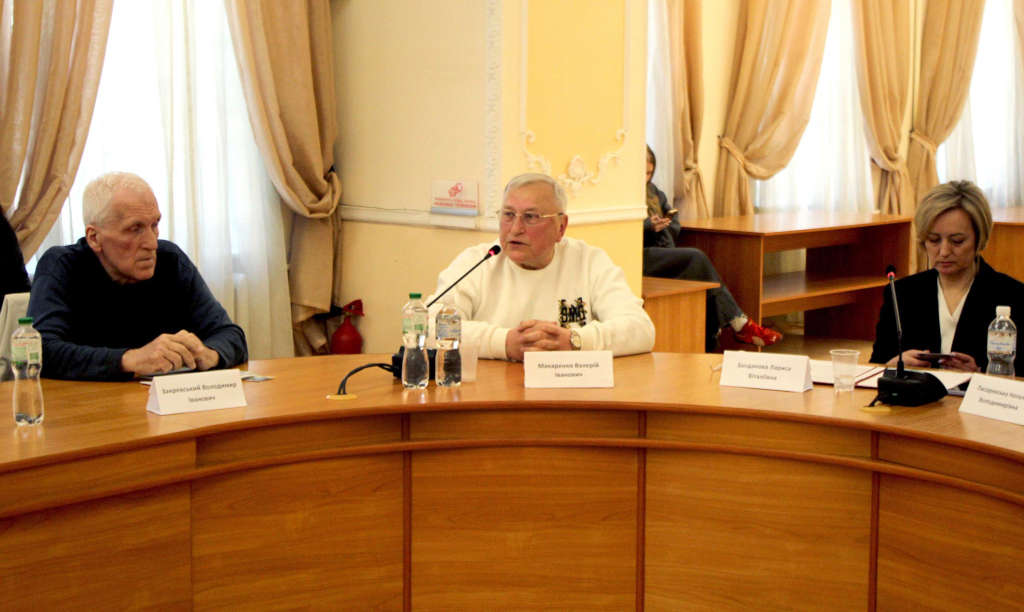 In the photo: V.Makarenko speaking
"The terrible tragedy that occurred in 1986 and affected virtually every Ukrainian is being remembered by many people these days. Some recall one aspect of it, others focus on something else. Today, however, we are opening an exhibition that sheds light on some of its lesser-known dimensions, including the role your parents and grandparents played in overcoming its consequences and their contribution to this immense effort," said Nataliia Pysarevska, Director of the Borys Paton State Polytechnic Museum, addressing the audience. "We also wanted to show how people first learned about what had happened at Chornobyl, what price was paid for telling the truth, and how that truth was documented and ultimately brought to the public."
The exhibition gave visitors the opportunity to explore information panels presenting a detailed chronology of the disaster, as well as authentic equipment and personal items used by the liquidators and journalists who worked in the contaminated zone. Among the exhibits were a protective "petal" respirator, film cameras, a video recorder used by television crews to record their reports, and other original artifacts. At the exhibition opening, Vitalii Tatarchuk, Head of the Museum's Department of the History of Igor Sikorsky Kyiv Polytechnic Institute, shared his personal memories of growing up in Prypiat and being evacuated after the disaster. Interestingly, he had been the same age in 1986 as some of the youngest participants from the Sail Children's Media School were at the time of the event, making his story particularly engaging for the aspiring journalists. The exhibition also highlighted the contributions of Igor Sikorsky Kyiv Polytechnic Institute's researchers and staff to the mitigation of the nuclear disaster's consequences, recognizing their significant role in those efforts.
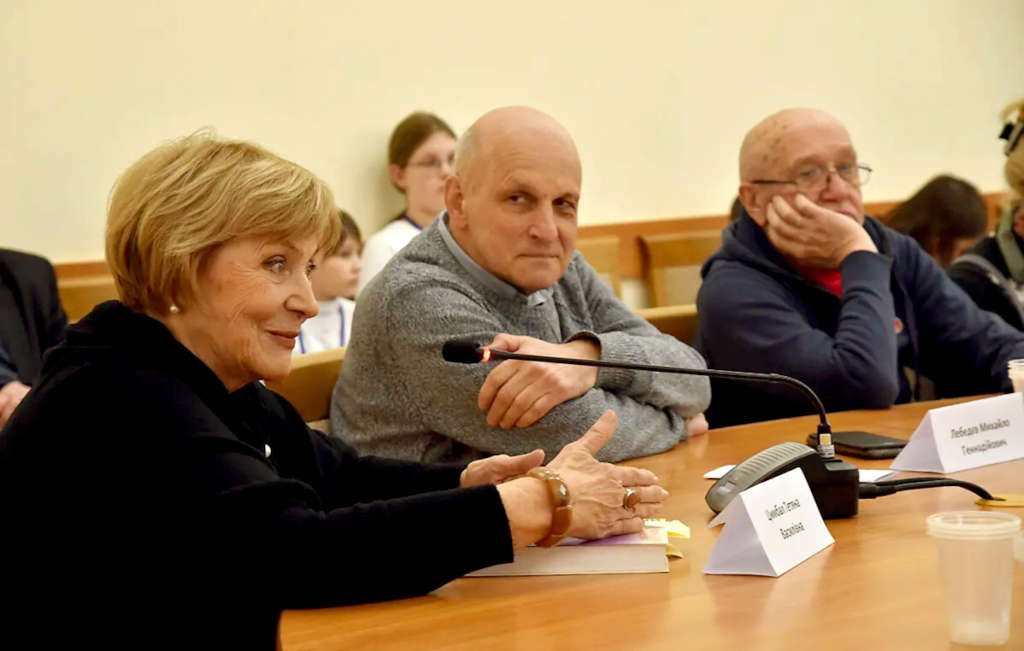 In the photo: T. Tsymbal performs
The roundtable discussion followed the exhibition opening. Scientists, journalists, television cameramen, and military personnel—people whose lives were forever changed by Chornobyl—shared their experiences. Among the speakers were Anatolii Krysenko, a researcher and lecturer at Igor Sikorsky Kyiv Polytechnic Institute and one of the developers of the radionuclide-contaminated water purification method later known as the "KPI Technology" (his memoir Our Work Was Not in Vain was published in the previous issue of Kyiv Polytechnic); Tetiana Tsymbal, People's Artist of Ukraine, television journalist and author and host of the Bells of Chornobyl television marathon and numerous other Chornobyl-related programs; Valerii Makarenko, the journalist who produced the first television report on the disaster for the program Actual Camera and now President of the International Organization Chornobyl–Fukushima Union; Volodymyr Zakrevskyi, an Igor Sikorsky Kyiv Polytechnic Institute graduate, thermal engineer, Chornobyl cleanup participant, and later journalist; television cameramen Mykhailo Lebiediev and Serhii Kurylyk, who filmed the cleanup operation during its first months; and a retired Colonel, Chairman of the Committee of the All-Ukrainian Union of Disabled Chornobyl Liquidators "Chornobyl-86," journalist, and author of the book 731st Special Battalion, who unfortunately was unable to speak because of time constraints. Ideally, the full accounts of all the liquidators and journalists who addressed the audience deserved publication, but the limited space available in the newspaper made this impossible. Therefore, we have confined ourselves to mentioning their names and fields of activity, hoping that this will nevertheless convey the significance of the roundtable discussion.
The roundtable discussion was moderated by Larisa Bohdanova, a staff member of the university museum who had herself worked for many years at Ukrainian Television. She encouraged the young participants—future journalists taking their first steps in the profession—to seize the opportunity and conduct short interviews with the veteran journalists and scientists attending the event, and they gladly accepted her suggestion. As a result, the roundtable also became a unique platform for dialogue between experienced representatives of Ukrainian journalism, who had first-hand stories to share about the events they witnessed and the work they carried out, and aspiring journalists eager to absorb that knowledge.